Context #
This project focuses on the development of a scalable, cloud-native web service designed to function as a modern voicemail system. The application parses user messages and persists them in a high-performance Redis database. To ensure reliability and portability, the entire stack is containerized using Docker and deployed on a Kubernetes cluster, allowing for automated management and dynamic scaling.
Client identity withheld under NDA. Architecture and outcomes described as delivered.
Constraints and objectives #
- Develop Core Service: Build a responsive web API (using Python or Node.js) to receive, parse, and store user messages.
- Containerize Workloads: Package the application and its dependencies into Docker containers to ensure consistent behavior across all environments.
- Orchestrate Deployment: Utilize Kubernetes to manage the application lifecycle, ensuring high availability, self-healing, and easy scaling.
- Integrate Data Layer: Implement a seamless connection between the stateless web service and the Redis stateful backend for efficient message retrieval.
- Master DevOps Workflows: specific experience with cloud-native tooling, including
kubectl, Helm, and container orchestration principles.
Architecture and implementation #
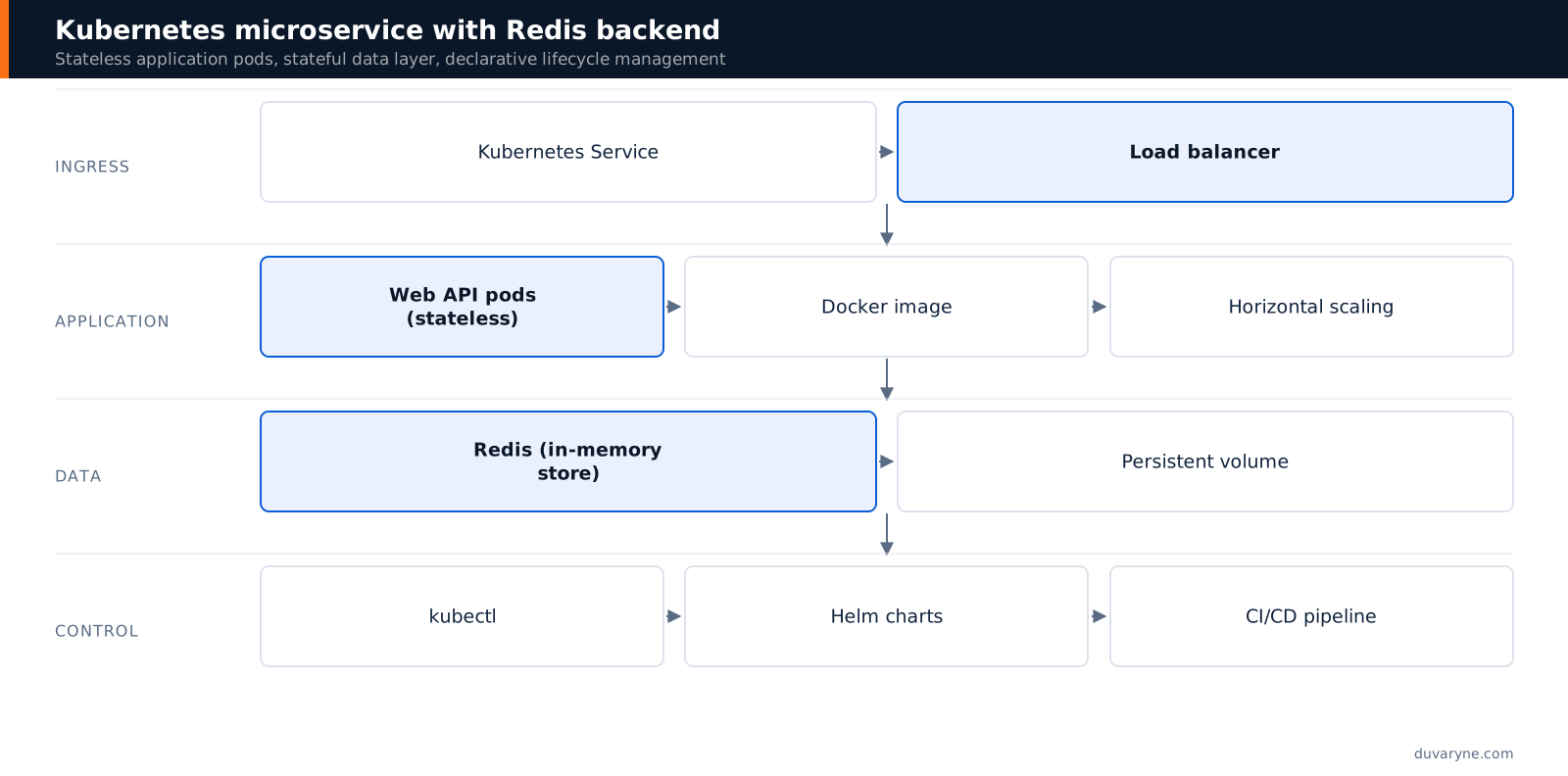
- Application Runtime: Python (Flask/FastAPI) or Node.js (Express)
- Data Store: Redis (In-memory key-value database)
- Containerization: Docker
- Orchestration: Kubernetes (K8s)
- DevOps & Automation: Kubernetes CLI (kubectl), Helm Charts, CI/CD Pipelines
- Architectural Pattern: Microservices
Outcomes #
- Functional Cloud Service: A fully deployed web application capable of handling concurrent read/write operations for user messages.
- Infrastructure Competency: Demonstrated ability to configure, deploy, and troubleshoot applications within a Kubernetes environment.
- Optimized Storage: Successful implementation of Redis for low-latency data persistence within a distributed architecture.
- Production Readiness: A standardized, portable deployment package ready for integration into larger production ecosystems.
What we would do differently #
Redis is deployed here as a single instance with a persistent volume, which is fine for a message store that can be rebuilt and wrong for anything you would miss. We would be explicit that this is a cache-shaped deployment, not a database-shaped one, and reach for a managed ElastiCache cluster the moment durability actually matters. We would also add resource requests and limits from the first manifest rather than after the first noisy-neighbour incident.