Context #
Facing the classic "it works on my machine" dilemma and slow manual release cycles, this project involved the complete re-engineering of the software delivery lifecycle for a software provider.
The goal was to transition from monolithic, manual deployments to a streamlined DevOps culture. By implementing a robust Continuous Integration/Continuous Deployment (CI/CD) pipeline, we established a "Factory Model" for software delivery. Code is now automatically pulled, containerized using Docker to ensure consistency across environments, tested via automated gates, and deployed to production without human interference.
Client identity withheld under NDA. Architecture and outcomes described as delivered.
Constraints and objectives #
- Immutable Infrastructure: Leverage Docker containerization to bundle the application with its dependencies, ensuring that the artifact deployed to Production is bit-for-bit identical to the one tested in Development.
- Pipeline-as-Code: Move away from manual build steps to a version-controlled, scripted pipeline (Jenkinsfile) that defines the entire lifecycle of the application.
- Automated Quality Gates: Enforce a "Stop-the-Line" policy where the deployment is automatically aborted if unit tests or integration tests fail, preventing bad code from reaching users.
- Reduce Lead Time to Change: Shrink the gap between a developer committing code and that feature going live from days to minutes.
Architecture and implementation #
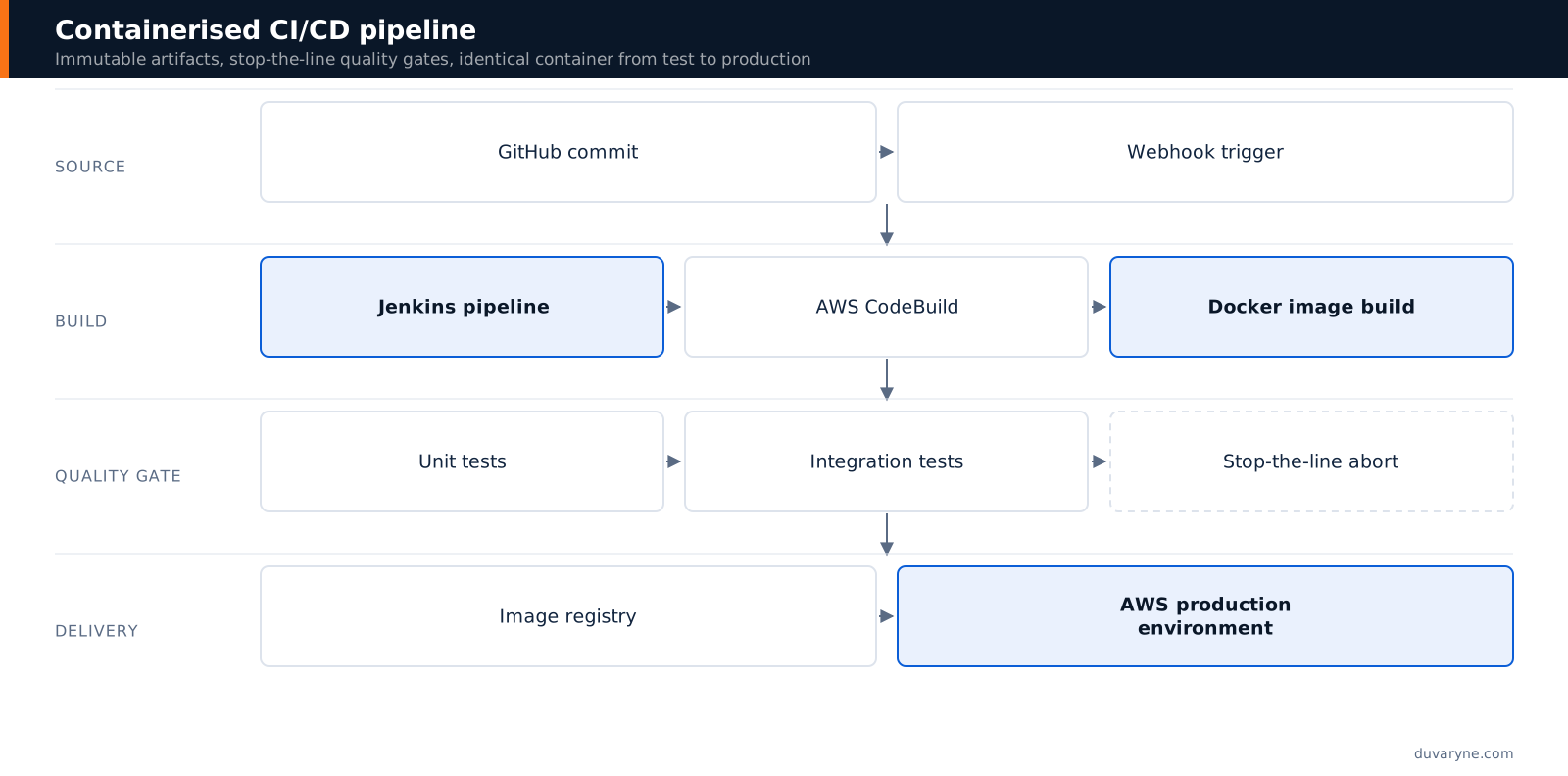
- Source Control Management: GitHub serving as the single source of truth and webhook trigger.
- Orchestration Core: Jenkins configured as the central automation server managing the pipeline stages.
- Containerization: Docker for packaging the web application into lightweight, portable images.
- Build Infrastructure: AWS CodeBuild (integrated with Jenkins) to provide scalable, on-demand compute for compiling code and running tests.
- Pipeline Workflow: Stage 1 (Artifact Construction): Automated retrieval and Docker build process.
- Stage 2 (Quality Assurance): Execution of test suites against the containerized application.
- Stage 3 (Delivery): Automated push to the registry and deployment to the AWS production environment.
Outcomes #
- 80% Reduction in Release Overhead: Eliminated manual server configuration and file transfers, allowing the team to deploy multiple times a day instead of once a week.
- Environment Parity: Completely eradicated environment-specific bugs by ensuring the container runtime is consistent across Dev, Test, and Prod.
- Enhanced Reliability: The integration of automated testing gates reduced production rollback rates by significantly catching errors early in the lifecycle.
- Scalable Build Capacity: By offloading build jobs to AWS, the pipeline handles concurrent builds without queuing or delaying developer feedback.
What we would do differently #
The Jenkins controller stayed a pet for longer than it should have. It was version-controlled and reproducible in principle, but rebuilding it was never actually tested until we had to do it, and that is not a property you want to discover under pressure. On a similar engagement today we would run the controller itself from a container image built by the same pipeline. We would also add image signing at the build stage rather than treating it as a separate hardening exercise later.